Ethiopian eVisa Application: Documents and Timing
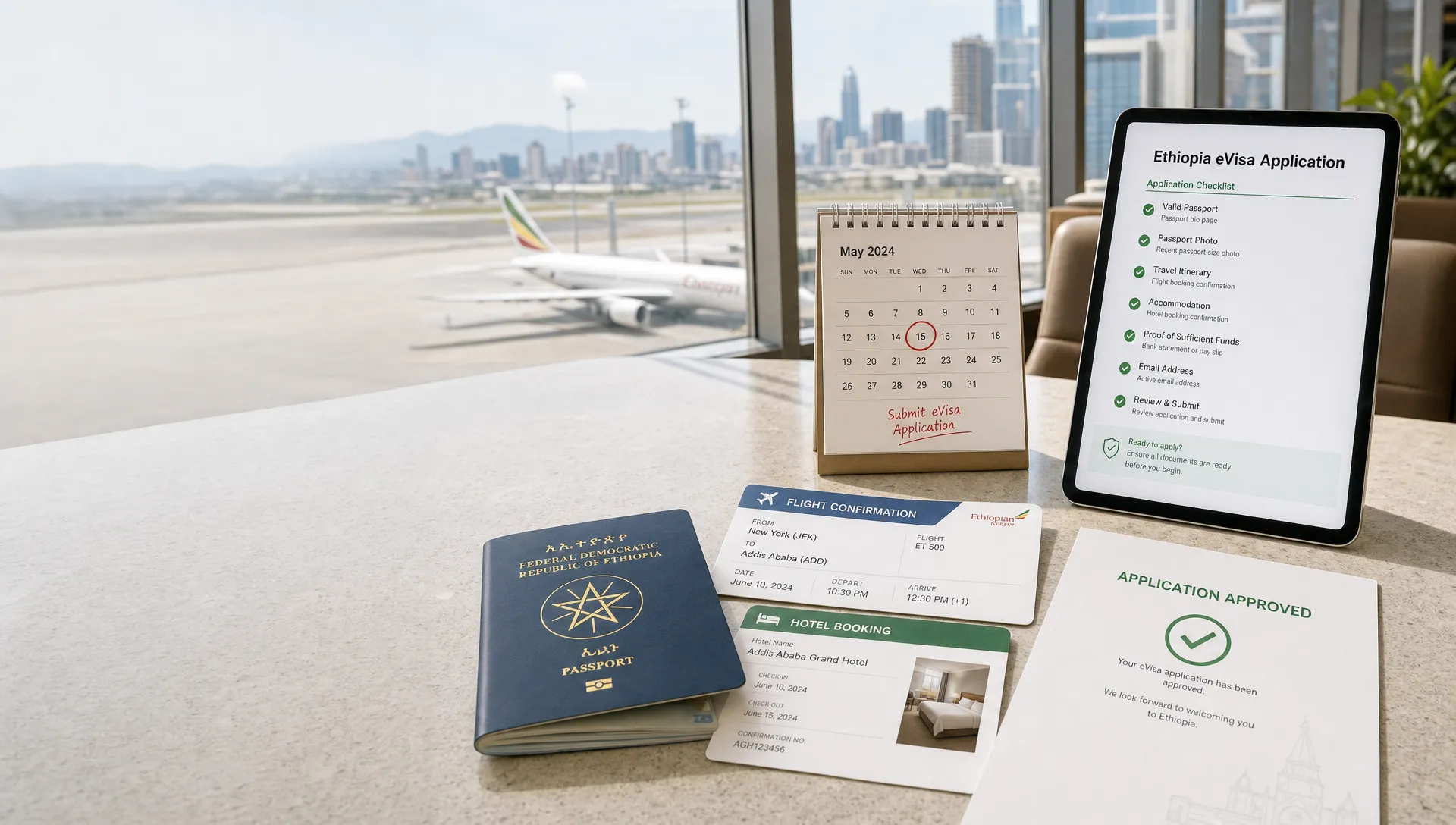
The Ethiopian eVisa application is usually straightforward when travelers prepare the right documents and submit at the right moment. The problems tend to come from avoidable details: a passport that is too close to expiry, a blurry upload, a mismatch between the flight date and intended entry date, or choosing an online visa route that does not match the trip purpose.
For travel businesses, these small mistakes can create high-friction support tickets at the worst possible time, just before departure. For travelers, they can mean delays, rework, or uncertainty at the airport. This guide breaks down the documents and timing considerations that matter most before applying for an Ethiopian eVisa.
First, confirm the eVisa fits the trip
Before collecting documents, confirm that an eVisa is the correct route for the traveler’s nationality, purpose of travel, and port of entry. Ethiopia’s online visa rules can change, and the application category must match the traveler’s actual visit.
The official Ethiopian eVisa portal should always be treated as the source of truth for current eligibility, visa categories, fees, and entry conditions. Short leisure trips are commonly handled through the online process, but travelers visiting for business, meetings, employment, journalism, NGO work, study, or other regulated activities may need a different visa category or additional supporting documents.
A key operational detail is the port of entry. Ethiopian eVisa rules have historically been tied to arrival through Addis Ababa Bole International Airport. If a traveler plans to enter by land, through another airport, or as part of a complex multi-country itinerary, they should verify whether the eVisa applies or whether embassy handling is required. If you need a deeper breakdown of the online route versus consular handling, SimpleVisa has a dedicated guide on applying through the Ethiopian Embassy e Visa process the right way.
Core documents for an Ethiopian eVisa application
The Ethiopian eVisa application generally asks for basic identity, passport, travel, and contact information. Exact requirements can vary by visa category, so travelers should prepare more than the bare minimum, especially if traveling for business or attending an event.
| Document or information | Why it matters | Practical check before applying |
|---|---|---|
| Valid passport | The visa is linked to the passport used in the application | Make sure the passport is valid for the required period and has the same details entered online |
| Passport scan or photo | Used to verify identity and travel document details | Upload a clear, uncropped image with all text readable |
| Digital passport-style photo | Used for applicant identification | Use a recent color photo with a plain background and no heavy shadows |
| Arrival and departure details | Helps align the visa request with the trip | Confirm flight dates before submitting, especially if the visa validity is tied to the intended arrival date |
| Accommodation or host information | May be requested or useful at the border | Keep hotel, tour operator, or host address consistent with the itinerary |
| Email address | Used for application communication and visa delivery | Use an inbox the traveler or agency can access quickly |
| Payment card | Needed to pay the government or processing fee online | Confirm the card supports international online payments |
| Supporting documents for special categories | Business, conference, NGO, or other categories may require proof | Prepare invitation letters, registration confirmations, or sponsor details if relevant |
The most important document is the passport. A traveler should not apply with an old passport if they expect to renew it before departure, because the eVisa will typically be connected to the passport number submitted in the application. If the traveler gets a new passport after approval, they may need to reapply or carry additional proof, depending on current Ethiopian rules.
Photo and scan quality also deserve attention. Many eVisa delays are not caused by eligibility problems, but by images that are too dark, cropped, reflective, or hard to read. A passport scan should show the full bio-data page, including the machine-readable zone at the bottom. A photo should look like a standard passport photo, not a casual selfie.
For a broader checklist that applies across online visa systems, see SimpleVisa’s guide to documents needed for an electronic visa application. The same principles apply here: clean scans, consistent names, accurate dates, and enough time for correction if something is rejected.
Timing: when to apply for an Ethiopian eVisa
The safest timing depends on three things: how soon the traveler departs, how stable the itinerary is, and how much buffer is needed for corrections. Applying too late creates stress, but applying too early can also be risky if travel dates, passport details, or eligibility rules change.
As a practical planning rule, travelers should begin document preparation as soon as flights are likely, then submit the Ethiopian eVisa application once the itinerary is firm and the intended arrival date is confirmed. For most leisure travelers, applying at least one to two weeks before departure is a sensible buffer. During peak travel seasons, holidays, large events, or periods of administrative disruption, a longer cushion is better.
Do not assume that “online” means “instant.” Some eVisas are approved quickly, but applications can be held for review, require corrected documents, or be delayed by payment issues. Travel agencies and tour operators should avoid promising guaranteed turnaround unless they are working from confirmed, current processing data.
The timing is especially important because some visa validity periods are connected to the intended date of arrival, not just the approval date. Travelers should carefully read the validity rules shown during the application. The visa duration selected should cover the full stay in Ethiopia, including possible schedule changes.

A practical application timeline
A clear timeline helps travelers avoid last-minute surprises. The following approach works well for individual travelers and for travel businesses building customer reminders into booking flows.
| Time before departure | What to do | Why it helps |
|---|---|---|
| 4 to 6 weeks before travel | Confirm passport validity, route, purpose of travel, and whether an eVisa is suitable | Identifies early if an embassy route or passport renewal is needed |
| 2 to 3 weeks before travel | Finalize accommodation, host details, and supporting documents | Prevents inconsistent or incomplete applications |
| 1 to 2 weeks before travel | Submit the application if the itinerary is firm | Leaves time for review, corrections, or payment troubleshooting |
| 3 to 5 days before travel | Check approval status and download the eVisa | Reduces airport-day uncertainty |
| Travel day | Carry digital and printed copies | Helps if airline staff or border officers ask for proof |
For travel companies, this timeline can be translated into automated reminders. A customer who books a flight to Addis Ababa can be prompted to check passport validity immediately, then guided to upload documents only when the trip details are stable. This reduces support workload and improves the traveler experience.
If you are comparing timing across multiple destinations, SimpleVisa’s guide on when to apply for an electronic visa offers a useful framework for building buffers into travel planning.
Common mistakes that delay Ethiopian eVisa applications
Most eVisa issues are preventable. The application form may look simple, but it depends on exact data matching. A single typo can cause confusion if the passport, flight booking, and visa approval do not align.
The most common mistakes include:
- Entering the wrong passport number, issue date, expiry date, or nationality
- Uploading a blurry passport page or a photo that does not meet basic passport-photo expectations
- Applying under the wrong visa category for the purpose of travel
- Selecting a visa duration that does not cover the full stay
- Using an email address that the traveler does not check regularly
- Assuming the eVisa is valid for every Ethiopian entry point
- Waiting until the final 24 to 48 hours before departure to apply
Name formatting deserves special care. If the passport shows multiple given names, hyphenated surnames, or a different order than the booking system, the application should follow the passport exactly. Travel businesses should train support teams not to “correct” names based on customer preference if the passport says otherwise.
Payment errors are another common friction point. International online card payments can fail because of bank security checks, expired cards, insufficient authorization, or browser issues. If the payment fails, the application may not be submitted. Travelers should keep screenshots or confirmation emails after payment, but they should avoid submitting duplicate applications unless the official system clearly instructs them to do so.
Special situations: business travel, families, and multi-country trips
Business travelers should be careful not to use a tourist category if the trip purpose requires business authorization. Conferences, commercial meetings, NGO activity, or assignments with a local organization may require invitation letters or additional documentation. The safest approach is to check the exact category on the official portal and collect supporting evidence before starting the form.
Families and groups should prepare each traveler’s documents separately. Children usually need their own valid passport and visa approval unless a specific exemption applies. Group leaders should not assume that one approval covers everyone. For agencies, it is best to track each applicant independently, even when they share the same itinerary.
Multi-country itineraries require extra attention. For example, a traveler may fly from Europe to Dubai, then Addis Ababa, then Nairobi, then return through Ethiopia. The Ethiopian visa type, entry count, validity window, and final routing all matter. Some travelers also combine Ethiopia with a longer Gulf stopover or relocation research; in that case, resources like Dubai and UAE property listings can be useful for accommodation planning outside Ethiopia, while the Ethiopian eVisa documents should still reflect the traveler’s actual stay and contacts in Ethiopia.
Travelers should also distinguish between transit and entry. Passing through an airport without entering a country can have different rules from leaving the airport, collecting bags, or staying overnight. If a traveler plans to leave the airport in Ethiopia, they should verify whether a visa is required for that situation.
What to do after approval
Once the Ethiopian eVisa is approved, travelers should not simply rely on an email buried in their inbox. They should download the approval document, check every detail, and keep accessible copies.
Review these fields immediately after approval:
- Full name and passport number
- Nationality and date of birth
- Visa type or category
- Validity dates and permitted stay
- Entry conditions and arrival point
If something is wrong, the traveler should contact the appropriate official support channel or service provider before departure. Airlines may check visa eligibility before boarding, and border officers will make the final admission decision on arrival.
A printed copy is still useful, even when a digital copy is accepted. Phones run out of battery, airport Wi-Fi can be unreliable, and screenshots can be hard to read. A printed copy of the eVisa, passport, return or onward ticket, accommodation confirmation, and supporting invitation can reduce friction at check-in and arrival.
How travel businesses can improve the eVisa experience
For travel businesses, the Ethiopian eVisa application is not just an administrative step. It is part of the customer journey. If customers discover visa requirements late, they may contact support, delay payment, or abandon the booking. If they receive clear guidance early, the visa process becomes an opportunity to build trust and generate ancillary revenue.
Good visa guidance should be specific without overpromising. Instead of saying “your visa will be approved in two days,” a better experience is to tell customers what documents to prepare, when to apply, what entry rules to confirm, and why they should leave a buffer.
This is where integrated visa support can create measurable value. SimpleVisa helps travel businesses guide customers through border requirements, streamline visa application flows, and add visa services through API, white-label, data, or no-code options. For destinations like Ethiopia, that means customers can receive clearer prompts at the right time instead of searching for requirements after checkout.
Frequently Asked Questions
How early should I submit an Ethiopian eVisa application? A sensible rule is to prepare documents several weeks in advance and submit once your itinerary and intended arrival date are confirmed, ideally at least one to two weeks before departure. Add more buffer during holidays, peak seasons, or complex trips.
What documents do I need for an Ethiopian eVisa application? Most travelers should prepare a valid passport, a clear passport-page scan, a recent passport-style photo, travel dates, accommodation or host details, an email address, and a payment card. Some visa categories may require invitation letters or other supporting documents.
Can I enter Ethiopia anywhere with an eVisa? Do not assume so. Ethiopian eVisa entry conditions should be checked on the official portal before travel, especially if you are not arriving through Addis Ababa Bole International Airport or if you plan to enter by land.
What happens if my passport changes after my eVisa is approved? Because the eVisa is usually linked to the passport used in the application, changing passports can create problems. Check official guidance before traveling, and do not apply with a passport you expect to replace before departure.
Is the Ethiopian eVisa the same as an embassy visa? No. An eVisa is an online authorization for eligible travelers and trip purposes. Embassy or consular processing may still be required for certain nationalities, entry routes, or visa categories.
Make Ethiopian eVisa guidance easier for customers
The Ethiopian eVisa application is manageable when travelers know what to prepare and when to act. The key is not rushing: confirm eligibility, match the visa type to the trip, upload clean documents, and leave enough time for review.
For travel businesses, the opportunity is to make this process visible before it becomes urgent. By embedding visa guidance into the booking journey, you can reduce last-minute support pressure, improve customer confidence, and turn visa assistance into a smoother ancillary service.