How an e Visa System Improves Travel Booking Flows
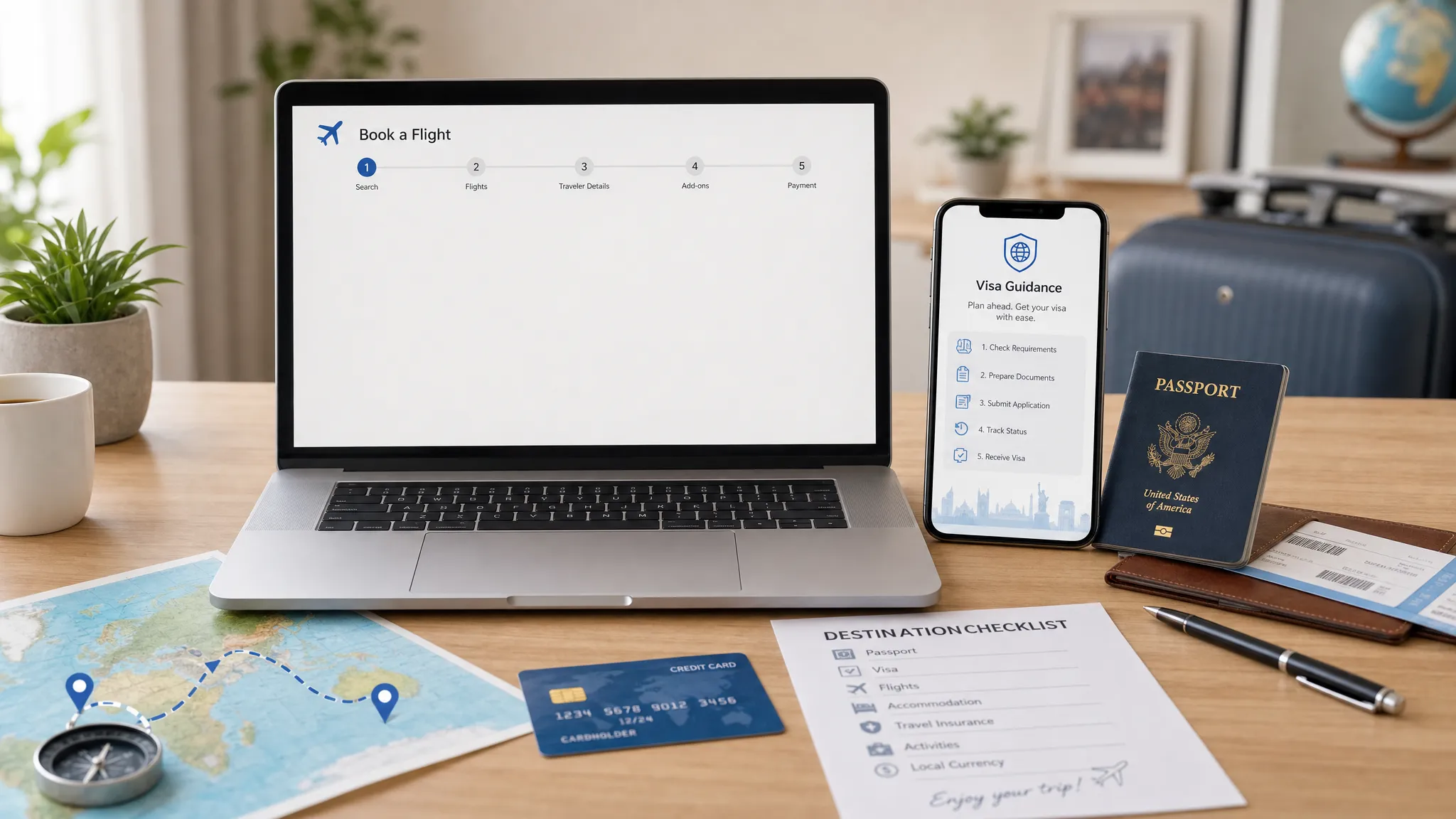
A travel booking flow can feel effortless right up to the moment a customer realizes they may need a visa. If that requirement appears after checkout, in a confirmation email, or worse, at the airport, the booking experience stops being simple. The traveler now has to search government websites, interpret eligibility rules, collect documents, and hope they apply in time.
For travel businesses, that friction is not just a customer service issue. It can affect conversion, increase support tickets, create uncertainty before departure, and leave ancillary revenue on the table. An e Visa system helps solve that problem by bringing visa requirements, eligibility checks, guided applications, and status updates into the booking journey itself.
Instead of treating visas as an external task, travel companies can make border requirements part of a smoother end-to-end purchase experience.
Why visa friction disrupts travel booking flows
Most booking flows are optimized for speed. A customer selects a flight, hotel, package, cruise, or tour, enters passenger details, pays, and receives confirmation. But international travel has a compliance layer that does not always fit neatly into that path.
Visa requirements depend on multiple variables, including nationality, destination, transit points, length of stay, purpose of travel, passport validity, and sometimes residency. If the booking flow does not surface those requirements early enough, customers can be left with an uncomfortable question: “Am I actually allowed to take this trip?”
That uncertainty can cause several problems for travel businesses. Some customers abandon the purchase to research visa rules elsewhere. Others complete the booking but contact support afterward for help. Some discover the requirement too late and blame the travel brand for not making the process clear.
Travel document requirements are operationally important enough that airlines and travel platforms have long relied on dedicated data sources such as IATA Timatic to help verify entry rules. The same principle applies across the broader travel ecosystem: if a customer needs permission to enter a country, the booking experience should make the next step obvious.
This is where an e Visa system changes the flow. It connects travel planning with visa action, reducing the gap between “booked” and “ready to travel.”
What an e Visa system adds to the customer journey
An e Visa system is more than an online form. In a travel booking context, it is a layer that helps identify visa requirements, guide travelers through the application process, manage required documents, and communicate status updates.
For a traveler, the benefit is convenience. They do not need to leave the booking environment and start from scratch on a separate website. For a travel business, the benefit is control over the journey. The company can provide a clearer experience, reduce uncertainty, and create a relevant ancillary service at the right moment.
If you want a broader traveler-focused overview, SimpleVisa also explains the benefits of electronic visas in more detail. But in booking flows, the strategic value is not only that eVisas are digital. It is that visa processing can be integrated into the commercial journey.
A strong e Visa system typically supports several booking-flow functions:
- Requirement checks based on trip and traveler details.
- Guided application steps that reduce confusion.
- Document collection and validation prompts.
- Payment and submission workflows.
- Status tracking and traveler notifications.
- API, white-label, no-code, or data-service implementation models.
The goal is not to slow down the booking. The goal is to remove ambiguity at the exact point when the traveler is most engaged and most willing to complete trip preparation.
How an e Visa system improves each stage of the booking flow
Visa support can appear at different points in the customer journey. The best placement depends on the type of travel product, the level of traveler detail available, and the complexity of the destination.
For example, a flight booking site may introduce a visa check after route and nationality are known. A tour operator may surface requirements on destination pages before a customer chooses dates. A cruise company may need to account for several ports and transit points. A corporate travel platform may prioritize compliance and visibility for travel managers.
| Booking stage | Common visa-related friction | How an e Visa system improves the flow |
|---|---|---|
| Search and inspiration | Travelers do not know whether a destination requires a visa. | Destination pages can flag that a visa may be needed and set expectations early. |
| Passenger details | Nationality, residency, and passport data are collected but not used for visa guidance. | The system can use traveler data to check eligibility and requirements. |
| Checkout | Customers worry about hidden requirements before paying. | Visa support can be presented as a helpful add-on or next step. |
| Post-booking | Travelers must research and apply independently. | Guided applications and reminders keep them moving toward departure readiness. |
| Pre-departure | Last-minute issues create support pressure. | Status updates and document prompts reduce avoidable confusion. |
The most important shift is timing. Visa information is most useful before it becomes urgent. By moving visa guidance upstream, travel businesses make the journey feel more complete.
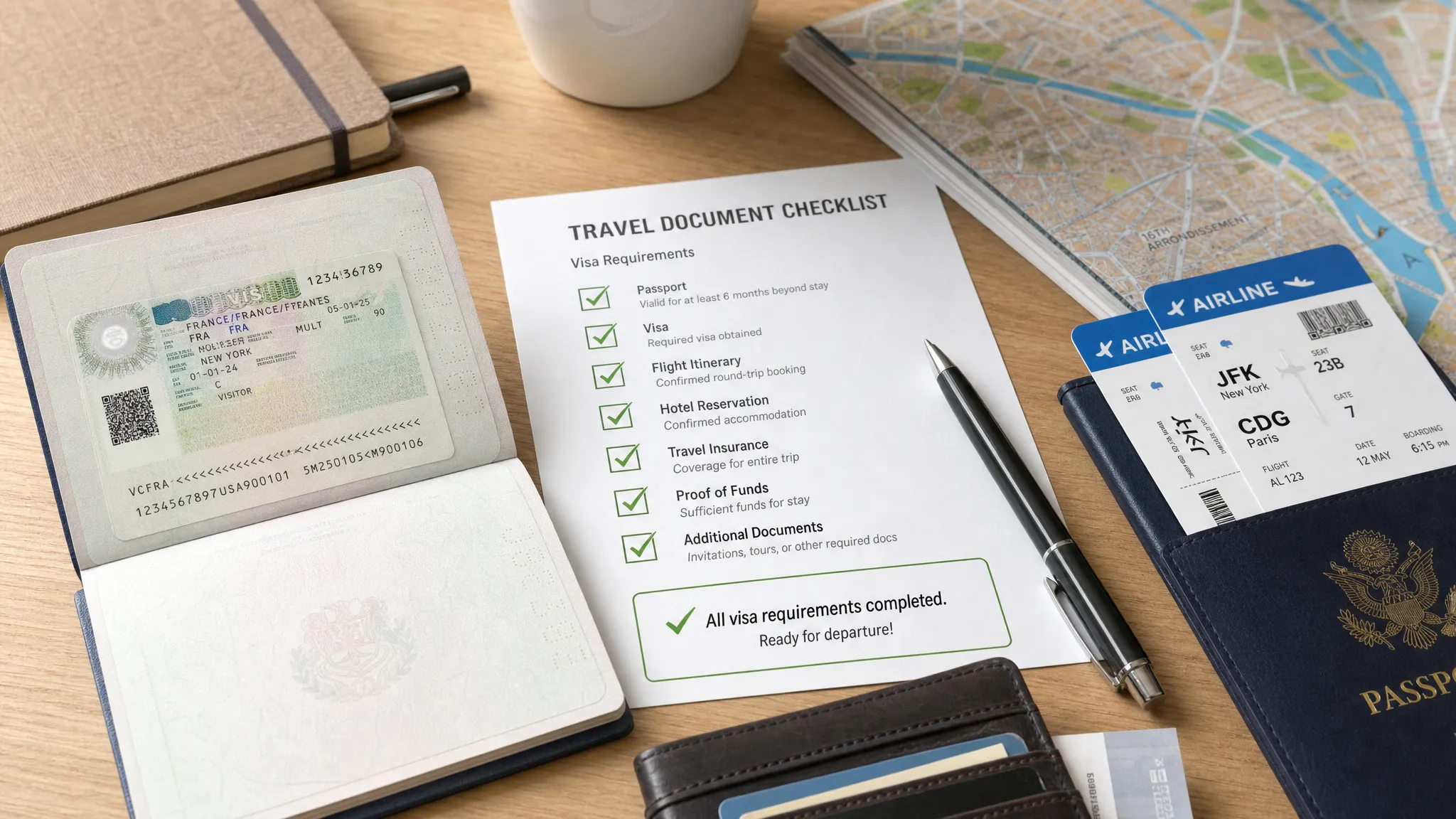
7 practical ways an e Visa system improves travel booking flows
1. It reduces uncertainty before checkout
Customers are more likely to feel confident when they know what is required to enter a destination. Even if the visa application happens after payment, surfacing the requirement early can reduce hesitation.
This matters because international travel purchases are often high-value, time-sensitive decisions. A traveler may be ready to buy, but an unanswered visa question can make them pause. If the booking flow clearly explains that visa support is available, that pause becomes less disruptive.
For travel businesses, this is not about overwhelming customers with legal detail. It is about making the next step visible. A simple message such as “Visa required for this destination, guided application available after booking” can be more reassuring than leaving the traveler to search on their own.
2. It keeps the traveler inside a trusted brand experience
When visa support is disconnected from the booking flow, the traveler often leaves the travel brand’s environment. They may visit government pages, third-party agents, forums, or outdated articles. That creates inconsistency and weakens the customer experience.
A white-label e Visa application app or embedded integration keeps the process closer to the original booking journey. The traveler continues in a familiar environment, with guidance that is connected to their trip context.
This is especially valuable for travel businesses that have invested heavily in brand trust. If a customer already trusts a travel agency, airline, tour operator, or booking platform with the trip, it is natural to help them with the documentation step as well.
3. It turns a compliance need into relevant ancillary revenue
Ancillary revenue works best when the offer is timely, useful, and clearly connected to the trip. Visa support meets all three conditions. A traveler who needs an eVisa is not being sold an unrelated extra. They are being helped with a required step.
An e Visa system can allow travel companies to present visa processing as a value-added service. That can create a new revenue stream while improving the customer experience. The key is to position it as assistance, not pressure.
The best booking flows make the offer feel like part of trip readiness. For example, after a customer selects an international itinerary, the system can explain that the destination may require an electronic visa and provide a guided application option.
4. It simplifies complex itineraries
Simple round trips are only one part of international travel. Many bookings include stopovers, multi-country tours, cruises, layovers, or different nationalities in the same group. These scenarios can make visa rules difficult for travelers to interpret.
An e Visa system can help by using structured trip data and traveler information to determine which requirements may apply. This is particularly important when a booking includes multiple passengers. A family, tour group, or corporate team may include travelers with different passports and different eligibility rules.
Without a system, support teams may need to answer the same question repeatedly for each traveler. With a guided process, customers receive more personalized instructions based on the details that matter.
5. It reduces avoidable support tickets
Visa questions can consume a lot of customer service time. Travelers ask whether they need a visa, which documents are required, how long approval takes, where to apply, and what to do if they made a mistake.
Not every question can be eliminated, but many can be prevented with better flow design. Clear requirement checks, guided forms, document prompts, and application status updates can reduce the need for manual intervention.
This is especially useful during peak travel seasons, when customer service teams are already managing schedule changes, cancellations, and payment issues. Automating parts of the visa journey helps support teams focus on exceptions rather than routine guidance.
For businesses evaluating operational impact, it is useful to compare eVisa workflows with broader travel visa document systems that help structure document collection and traveler guidance.
6. It improves application accuracy
Many visa application problems come from small errors: misspelled names, incomplete passport details, low-quality document uploads, incorrect travel dates, or missing supporting information. These errors can delay processing and create stress close to departure.
A well-designed e Visa system helps travelers complete applications more accurately by breaking the process into guided steps. Field prompts, format checks, and document reminders can reduce preventable mistakes.
This does not guarantee approval, since governments make the final decision. But it can improve the quality of the application submitted and reduce friction caused by avoidable omissions.
7. It creates a more complete post-booking experience
The booking confirmation should not be the end of the customer journey. For international travel, it is often the start of preparation. Visa guidance fits naturally into that post-booking phase.
A good post-booking flow can remind the traveler to apply, show application status, explain expected timelines, and provide next-step instructions. This keeps the traveler engaged with the travel brand after purchase and before departure.
That engagement matters. It creates opportunities to provide helpful reminders, reduce anxiety, and strengthen customer loyalty. A traveler who feels supported through the administrative side of travel is more likely to trust the same brand next time.
Choosing the right implementation model
Not every travel business needs the same level of integration. A large online travel agency may want an API-based experience inside its booking engine. A tour operator may prefer a branded application flow. A smaller agency may need a no-code option that can be launched quickly without major technical work.
The right model depends on your booking architecture, development resources, customer journey, and revenue goals.
| Implementation model | Best fit | Booking-flow advantage |
|---|---|---|
| API integration | Travel sites that want visa checks and application flows inside existing systems. | Creates a seamless, data-driven experience with minimal customer handoff. |
| White-label application | Brands that want a guided visa flow under their own customer experience. | Builds trust while avoiding the need to develop the entire system internally. |
| Custom data service | Businesses that need visa requirement intelligence for multiple products or markets. | Helps power destination pages, booking prompts, and support workflows. |
| No-code implementation | Teams that want to launch visa support without a large development project. | Speeds up deployment and makes the service easier to test. |
For teams still learning how eVisas work at the application level, this guide to electronic visa processing basics can help align product, support, and commercial stakeholders before implementation.
Best practices for adding eVisa support to a booking flow
The most effective visa integrations are designed around traveler clarity. The system should help customers understand what applies to them, what they need to do, and when they need to do it.
A few principles make a major difference.
First, ask for the right information at the right time. Nationality, destination, travel dates, and passport details can be sensitive, so the booking flow should only request what is necessary for the stage of the journey. If a full passport number is not needed until the application step, avoid asking too early.
Second, avoid vague messaging. “Visa may be required” can be useful at the inspiration stage, but later in the flow travelers need more specific guidance. If eligibility depends on citizenship or residency, make that clear.
Third, make the service feel helpful rather than forced. Visa assistance should be presented as a way to simplify travel preparation. Customers should understand the value of guided support, especially when government requirements are unfamiliar.
Fourth, design for mobile. Many travelers manage bookings from phones, but visa applications often require document uploads and careful data entry. Clear instructions, readable forms, and easy save-and-return options can reduce frustration.
Finally, set realistic expectations. Processing times can vary, and government authorities remain responsible for decisions. A trustworthy system explains that clearly while still helping the traveler complete the process efficiently.
Metrics travel businesses should watch
An e Visa system should improve both customer experience and business performance. To understand its impact, travel companies should track metrics across the booking and post-booking journey.
Useful indicators include checkout conversion, visa-service attach rate, completed application rate, support tickets related to entry requirements, application error rates, refund or cancellation cases linked to visa issues, and post-trip customer satisfaction.
These metrics help answer important questions. Are travelers seeing visa guidance early enough? Are they starting but not completing applications? Are support teams receiving fewer repetitive questions? Is visa assistance producing meaningful ancillary revenue without hurting conversion?
The strongest results usually come from continuous refinement. A travel business can test where to introduce visa prompts, how to phrase the offer, which destinations need more guidance, and whether post-booking reminders improve completion rates.
Common mistakes to avoid
The biggest mistake is treating visa support as an afterthought. If the traveler only receives a generic reminder in a confirmation email, the business has missed the chance to reduce friction earlier.
Another common mistake is overloading the checkout with too much information. Visa rules can be complex, but checkout should remain focused. The best approach is to provide enough clarity to build confidence, then move detailed steps into a guided application experience.
Travel businesses should also avoid relying on static content that becomes outdated. Visa requirements can change, and outdated information can create customer frustration. Structured, regularly maintained data is essential.
Finally, do not blur responsibility. An e Visa system can guide the process and improve application quality, but approval decisions sit with government authorities. Clear terms, transparent expectations, and accurate messaging protect both the traveler and the brand.
Frequently Asked Questions
How does an e Visa system improve booking conversion? It reduces uncertainty by showing travelers whether visa action may be required and offering a guided next step. When customers understand how to become travel-ready, they are less likely to leave the booking flow to research requirements elsewhere.
Where should visa support appear in a travel booking flow? It depends on the product, but common placements include destination pages, passenger detail pages, checkout, and post-booking emails or dashboards. The best moment is usually when the system has enough traveler and itinerary data to provide useful guidance.
Can an e Visa system work without a full API integration? Yes. Some travel businesses use API integrations, while others start with a white-label app, custom data service, or no-code implementation. The right option depends on technical resources and how deeply the business wants visa support embedded in the booking journey.
Does an e Visa system guarantee approval? No. Government authorities make final visa decisions. A strong system can help travelers understand requirements, complete forms, upload documents, and track status, which can reduce avoidable mistakes and improve the application experience.
Which travel businesses benefit most from eVisa integration? Online travel agencies, tour operators, airlines, cruise companies, corporate travel platforms, and travel management companies can all benefit, especially if they serve international travelers across multiple destinations and nationalities.
Make visa support part of a smoother booking experience
Travelers do not just want to book a trip. They want confidence that they can take it. By integrating visa requirements and guided applications into the booking journey, travel businesses can reduce friction, support customers more effectively, and create a valuable ancillary revenue stream.
SimpleVisa helps travel businesses streamline visa applications through automation, API integration, white-label app options, custom data services, and no-code implementation paths. If your booking flow sends customers elsewhere for visa help, now is the time to make that experience simpler, more connected, and more useful.