What eVisa Zendesk Support Can and Can’t Solve
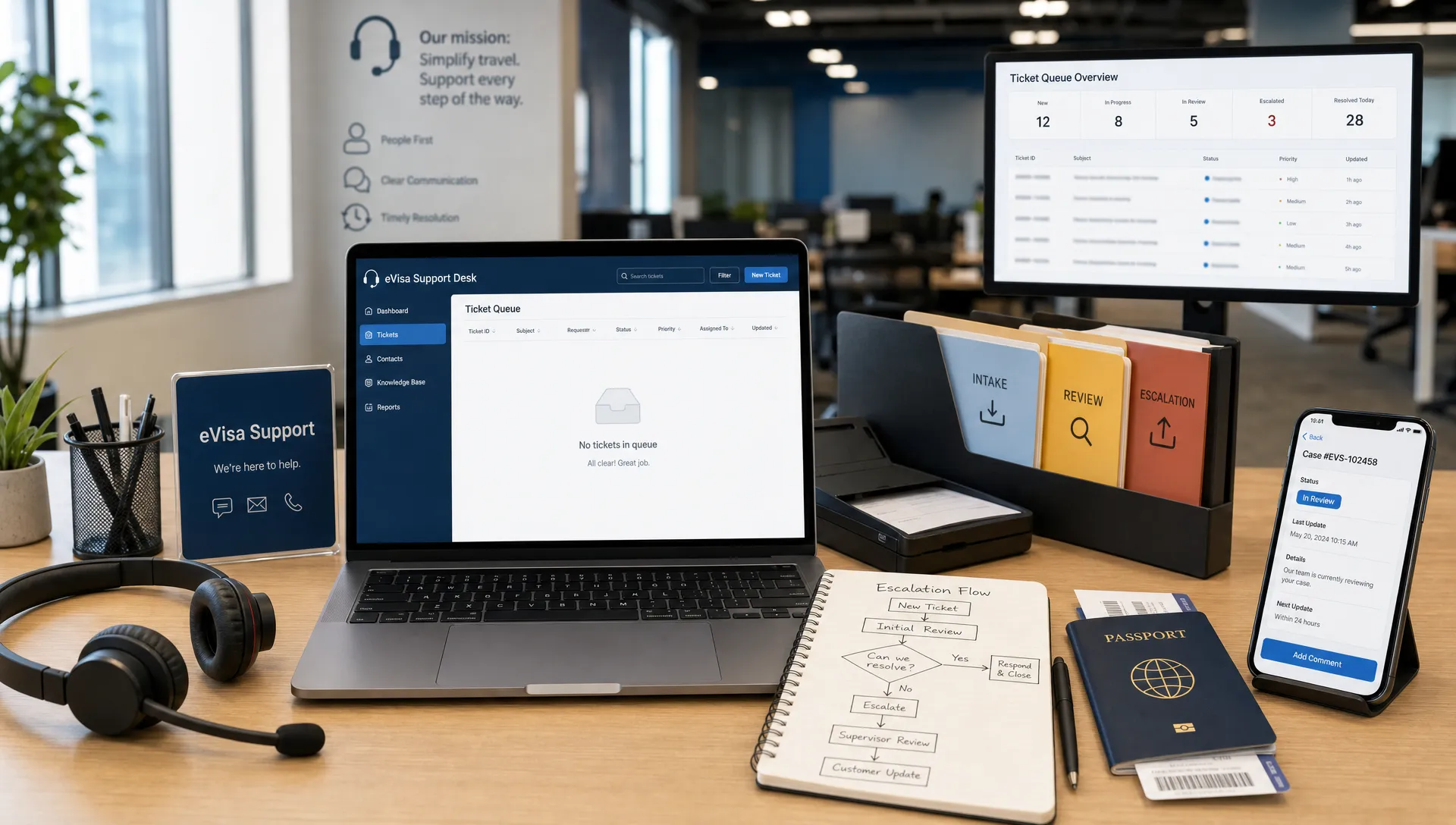
For many travelers, the helpdesk is the visa experience. They do not see the government portal, the validation rules, the destination-specific requirements, or the operational handoffs behind the scenes. They see a ticket in Zendesk asking why their application is pending, why a passport upload failed, or whether they can still fly tomorrow.
That makes eVisa Zendesk support valuable, but also easy to overestimate. Zendesk can help travel companies organize, automate, and respond to eVisa questions at scale. It can reduce confusion, route urgent cases, and create a clearer traveler experience. It cannot, however, approve a visa, override a border authority, or make an ineligible traveler eligible.
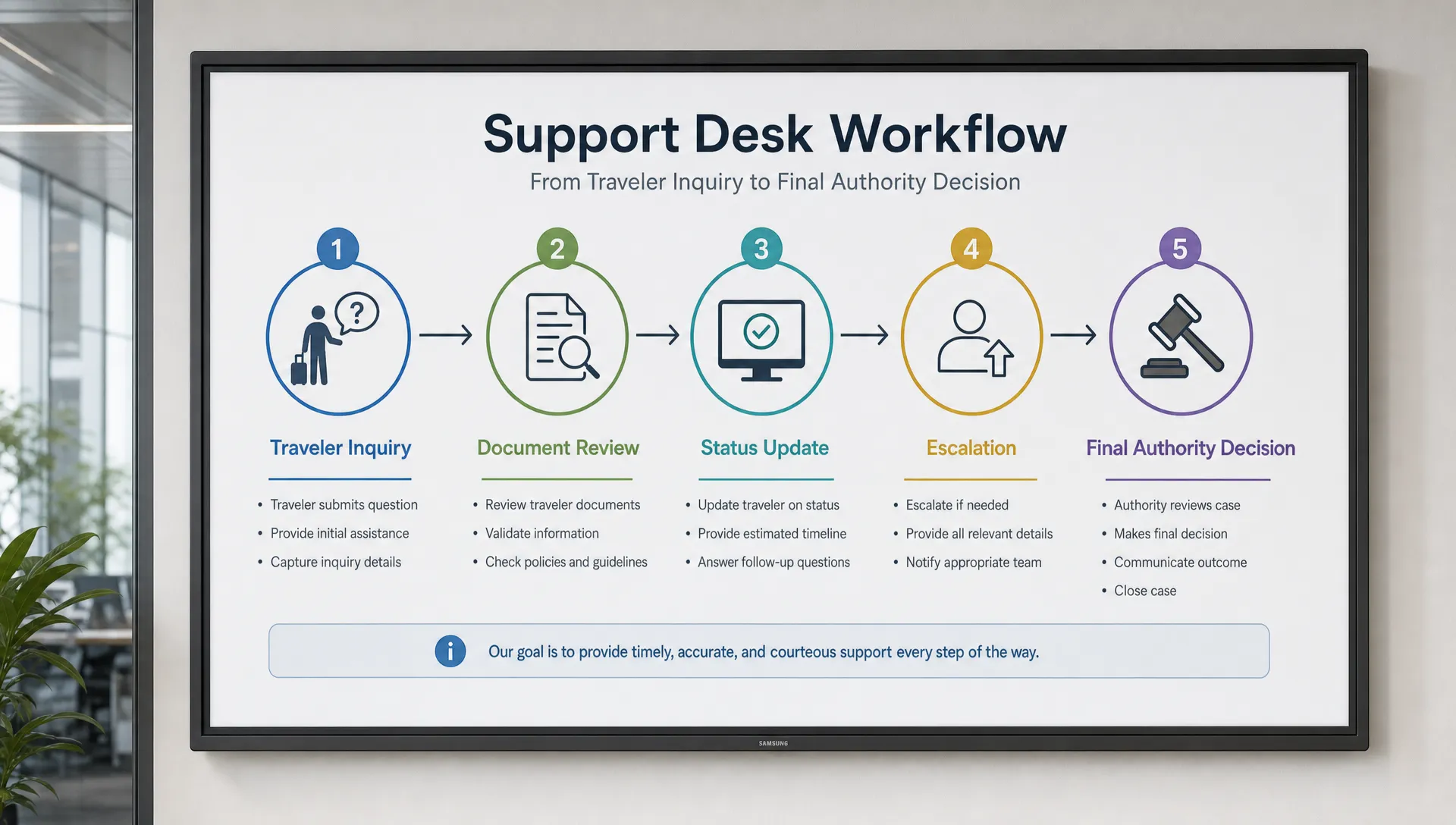
The most effective support teams draw a bright line between what the helpdesk can solve and what must be escalated to a visa operations team, a processing partner, or the government authority. That line protects travelers, support agents, and the business.
Why eVisa questions end up in Zendesk
Visa issues are high-anxiety support issues. A delayed hotel confirmation is annoying. A delayed eVisa can threaten the entire trip. That is why travelers often contact the first brand they trust, usually the airline, online travel agency, tour operator, or travel management company that sold the trip.
Zendesk is often where those requests land because it centralizes customer conversations across email, chat, web forms, and other support channels. For ordinary travel issues, a support agent may be able to solve the problem directly. For eVisas, the agent is often working inside a regulated process with external decision makers.
This creates three layers of responsibility:
- Customer support handles intake, clarification, traveler communication, and routine troubleshooting.
- Visa operations or a visa technology partner handles application workflow, document checks, submission tracking, and destination-specific escalation.
- Government or border authorities make the final decision on eligibility, approval, rejection, and entry.
When those layers are confused, agents overpromise and travelers lose trust. When they are clearly separated, Zendesk becomes a strong front door for visa support rather than a place where complex cases go to stall.
What eVisa Zendesk support can solve
A well-designed Zendesk setup can solve many visa-related problems before they become operational escalations. The key is to focus on issues that are within the travel company’s control.
Intake and triage
The first job of eVisa support is to understand what the traveler is actually asking. A traveler may say their visa is broken when the real issue is a missing passport scan, a name mismatch, a payment decline, or confusion about whether they need a visa at all.
Zendesk forms, tags, macros, and routing rules can help separate cases by urgency and type. For example, a traveler departing in 48 hours with a submitted application should not sit in the same queue as someone asking general eligibility questions for a trip six months away.
Good intake captures the information agents need without making the traveler repeat themselves:
- Destination and nationality
- Departure date and arrival date
- Passport country and passport expiry date
- Application reference number, if available
- Current status shown to the traveler
- Screenshot or error message, when relevant
The goal is not just faster replies. It is better routing. If a ticket is missing the application ID, no specialist can investigate efficiently.
Basic eligibility guidance
Zendesk can help agents direct travelers to the right visa path, provided the information comes from maintained rules and approved knowledge sources. This is especially important for travel brands serving multiple nationalities and destinations.
Agents can answer questions such as whether a traveler should check visa requirements before purchase, what documents are usually requested, or where to start an assisted eVisa flow. However, agents should avoid making absolute promises about eligibility unless that determination is supported by the actual destination rules and the traveler’s complete details.
For travel businesses, the safest model is to connect support responses to a maintained visa data source rather than asking agents to interpret rules manually. SimpleVisa supports travel companies with visa application automation, API integration, white-label application experiences, and custom data services, which can help keep the visa journey closer to the booking flow and reduce unsupported guesswork.
Document completeness issues
Many eVisa tickets are not true visa authority issues. They are document readiness issues. The passport image may be blurry. The traveler may upload a selfie instead of a passport-style photo. The name may be entered differently from the machine-readable zone. The travel date may not match the itinerary.
Zendesk support can often resolve these problems by identifying what is missing, explaining the correction clearly, and directing the traveler back to the application flow. This is especially effective before submission, when the application can still be corrected without involving the destination authority.
For a deeper look at preventable data problems, SimpleVisa’s guide to eVisa form mistakes that cause delays explains the common errors that create avoidable friction.
Payment and browser troubleshooting
Some eVisa support tickets are really checkout or portal usability tickets. A payment may fail because of bank authorization, 3D Secure, unsupported cards, duplicate attempts, browser extensions, or timeout errors.
Zendesk can help agents walk travelers through safe next steps, such as checking bank declines, trying a different supported payment method, avoiding repeated charges, or waiting for confirmation before submitting again. If the issue relates to a government portal, support should be clear about what the travel company can verify and what must be handled by the issuing authority or payment provider.
Status explanations and reassurance
A large share of eVisa contacts come from travelers asking whether anything is happening. Even when the application is moving normally, silence creates anxiety.
Zendesk can solve many of these tickets if agents can see the current application state or if automated status updates are available. A clear response such as application received, documents under review, submitted to authority, pending authority decision, or approved gives the traveler confidence that the case has not disappeared.
This is where operational visibility matters. The more status data support teams can access, the fewer tickets they need to escalate. SimpleVisa has covered this in more detail in its article on how real-time visa status visibility can reduce support demand.
What eVisa Zendesk support can’t solve
Zendesk can make the support process more organized, but it does not change who controls visa decisions. The limitations below should be built into agent training, macros, and customer-facing language.
It can’t approve or guarantee an eVisa
No helpdesk tool can guarantee approval. Approval depends on the destination authority’s rules, the traveler’s identity, travel history, passport validity, security checks, purpose of travel, and the accuracy of the application.
Support teams should be careful with phrases like guaranteed approval, no chance of rejection, or we will get it approved. Even if a company has a strong approval record, the final decision belongs to the authority.
A safer support message is: We can help ensure your application is complete and submitted through the correct process, but the final decision is made by the destination authority.
It can’t override government processing times
Zendesk can prioritize a ticket internally. It cannot force a government portal to process faster. Some destinations offer official expedited options, while others do not. Some applications are processed quickly, while others require additional review.
Support agents can explain expected processing windows, confirm whether the application was submitted, and escalate internally if a service-level issue occurred. They should not promise a decision by a specific time unless that commitment is backed by the relevant authority or the company’s own service terms.
It can’t fix ineligibility
If a traveler is not eligible for an eVisa based on nationality, passport type, destination rules, prior immigration history, or purpose of travel, Zendesk cannot turn that traveler into an eligible applicant.
Support can still help by explaining the issue in plain language and directing the traveler toward the appropriate next step, such as checking embassy requirements or reviewing alternative visa categories. But the helpdesk should not improvise exceptions.
It can’t provide unrestricted immigration advice
Support teams can provide process guidance, document checklists, and application assistance based on approved rules. They should be cautious about giving personalized legal or immigration advice unless the company is authorized to do so in the relevant jurisdiction.
This distinction matters. Telling a traveler where to upload a passport scan is operational support. Advising them how to answer a legal eligibility question after a prior overstay may require qualified expertise.
It can’t erase submitted mistakes in every case
Before submission, many mistakes can be corrected. After submission, correction options depend on the destination authority, application stage, and system design. Some authorities allow amendments. Others require a new application. Some may reject the application if key details are wrong.
Zendesk can gather the facts and route the case quickly. It cannot guarantee that a submitted passport number, date of birth, nationality, or name error can be changed.
It can’t control border entry
An approved eVisa is usually permission to travel or seek entry, not an unconditional guarantee of admission. Border officers may still ask questions, review documents, and make entry decisions under local law.
Support scripts should reflect that reality. Agents can help travelers understand what their approval means, but they should not state that entry is guaranteed in all circumstances.
A practical decision matrix for support teams
The fastest way to improve eVisa Zendesk support is to define which requests agents can resolve, which require visa operations, and which depend on an outside authority.
| Traveler request | Zendesk support can do | Escalation needed |
|---|---|---|
| I do not know if I need an eVisa | Direct traveler to the approved eligibility flow or maintained visa rules | Escalate if the traveler has unusual circumstances |
| My passport upload failed | Explain file requirements, request a clearer image, guide resubmission | Escalate if the application system is failing |
| I entered the wrong passport number | Check whether the application is submitted and collect corrected details | Escalate to visa operations or authority process after submission |
| My payment failed | Share payment troubleshooting steps and confirm whether a charge was recorded | Escalate if duplicate charges or provider errors appear |
| My application is pending | Check visible status and explain current stage | Escalate if the case exceeds expected internal or authority timelines |
| Can you guarantee approval before my flight? | Explain that approval is controlled by the authority | Escalate only if an official urgent channel exists |
| My visa was rejected | Share the available decision information and next steps | Escalate if the rejection reason is unclear or a reapplication path exists |
This kind of matrix should be embedded into macros and onboarding. It prevents agents from making case-by-case guesses under pressure.
The risk of treating eVisa tickets like ordinary support tickets
Visa support is different from normal customer service because the consequences are higher and the facts are more regulated. A generic apology macro may be fine for a delayed receipt. It is not enough for a traveler who may miss a flight because a document was submitted incorrectly.
The biggest risks are usually predictable.
First, support teams can create false confidence. If an agent says the traveler is all set before approval is actually issued, the traveler may stop checking their status or fail to prepare backup documents.
Second, support teams can mishandle sensitive data. Visa workflows involve passports, dates of birth, nationality, travel details, and sometimes additional identity documents. Zendesk views, forms, and permissions should be configured with privacy and access control in mind.
Third, teams can escalate too late. A ticket that sits in a general queue for two days may become urgent simply because nobody recognized it as a departure-sensitive visa issue.
The same platform-versus-authority distinction appears in other regulated industries. For example, flat-fee MLS listing services can streamline parts of a real estate sale, but they do not control buyer financing, inspection results, or government recording processes. In eVisa support, Zendesk can streamline the communication layer, but it cannot replace the authority that makes the final decision.
How to make Zendesk work better for eVisa support
The best eVisa support teams do not rely on heroic agents. They build a system that makes the right answer easier to give.
Create visa-specific ticket fields
Generic fields such as issue type and priority are not enough. Visa support needs structured data that reflects travel urgency and application state.
Useful fields include departure date, destination, nationality, application ID, application stage, submission date, payment status, document status, and escalation owner. These fields make reporting more useful and reduce back-and-forth between agents and specialists.
Build macros with careful language
Macros should save time without overpromising. Good macros explain what is known, what is unknown, and who controls the next step.
For example, a pending status macro should not say your visa will arrive soon unless that is confirmed. A better version is: Your application is currently pending review. We can confirm it has reached this stage, and we will update you when the next status is available.
For teams building a more complete response library, SimpleVisa’s customer support playbooks for eVisa issues offer a useful framework for scripts, macros, and escalation paths.
Separate operational priority from emotional urgency
Every traveler with a visa issue feels urgent, but not every case has the same operational priority. A strong Zendesk setup uses objective criteria.
Departure date, application status, destination processing rules, and completeness of documents should determine priority. A traveler departing tomorrow with a submitted application and no decision likely deserves immediate review. A traveler asking general questions for a trip next year may need a clear answer, but not emergency handling.
Use self-service for repeat questions
Many eVisa questions are repetitive. Do I need a visa? How long does it take? What photo should I upload? What does pending mean? Can I travel while it is processing?
A searchable help center can reduce tickets, but only if the content is written in traveler language and kept current. Support teams should review ticket tags monthly to identify questions that deserve better self-service answers.
Connect support to the application workflow
The best support experience happens when travelers do not need to open a ticket at all. Status notifications, guided document uploads, pre-submission validation, and clear next-step messaging reduce confusion before it reaches Zendesk.
For travel businesses, this is where a visa solution can work alongside the helpdesk. SimpleVisa helps companies automate visa processing, guide customers through applications, support premium eVisa management, and add visa services into booking flows through API, white-label, no-code, or data-service options. Zendesk can then focus on exceptions rather than becoming the main place where every traveler asks what to do next.
Metrics that show whether your eVisa support is improving
Support volume alone does not tell the full story. A growing travel business may receive more tickets even as the experience improves. The better question is whether the right types of tickets are going down and whether urgent cases are handled faster.
Track metrics such as contact rate per eVisa application, percentage of tickets about status, average time to first meaningful response, escalation rate by destination, document rejection rate before submission, payment failure ticket volume, and tickets opened within 72 hours of departure.
You should also review qualitative signals. Are travelers confused by the same status labels? Are agents asking specialists the same questions repeatedly? Are refunds being requested because expectations were unclear? These patterns usually point to content, workflow, or automation gaps rather than individual agent performance.
Where SimpleVisa fits into the support model
Zendesk is the communication layer. SimpleVisa is designed to help travel businesses simplify the visa application layer. The two solve different parts of the traveler journey.
For a travel company, the strongest model is not to make Zendesk responsible for everything. It is to reduce preventable visa tickets through guided applications, accurate data, automation, and clearer status visibility, then use Zendesk for the human moments that still require support.
That approach creates a better traveler experience and a better operating model. Agents spend less time interpreting visa rules manually. Operations teams receive cleaner escalations. Travelers get clearer next steps. The business can also create ancillary revenue from visa services without turning its general support queue into an immigration helpdesk.
Frequently Asked Questions
Can Zendesk be used for eVisa customer support? Yes. Zendesk can manage eVisa inquiries, organize tickets, route urgent cases, and support agents with macros and knowledge base content. It should not be treated as the system that controls visa decisions.
Can eVisa Zendesk support guarantee approval? No. Support teams can help travelers submit complete and accurate applications, but approval is decided by the destination authority.
What eVisa issues should be escalated outside Zendesk? Cases involving submitted data errors, delayed authority decisions, unclear rejections, possible ineligibility, duplicate payments, or imminent departure should usually be escalated to visa operations, a visa partner, or the relevant authority process.
How can travel companies reduce eVisa tickets in Zendesk? They can reduce tickets with guided application flows, pre-submission validation, clear document instructions, real-time status updates, accurate visa data, and a help center built around the questions travelers actually ask.
Should support agents give immigration advice? Agents can provide process guidance based on approved information, but they should avoid personalized legal advice unless the company is authorized and qualified to provide it.
Turn eVisa support into a clearer traveler experience
Zendesk can make eVisa support more organized, but it works best when paired with a purpose-built visa workflow. If your travel business wants to reduce avoidable tickets, guide travelers through border requirements, and create a smoother application experience, SimpleVisa can help you add visa services into your customer journey without making your support team carry the entire process alone.